
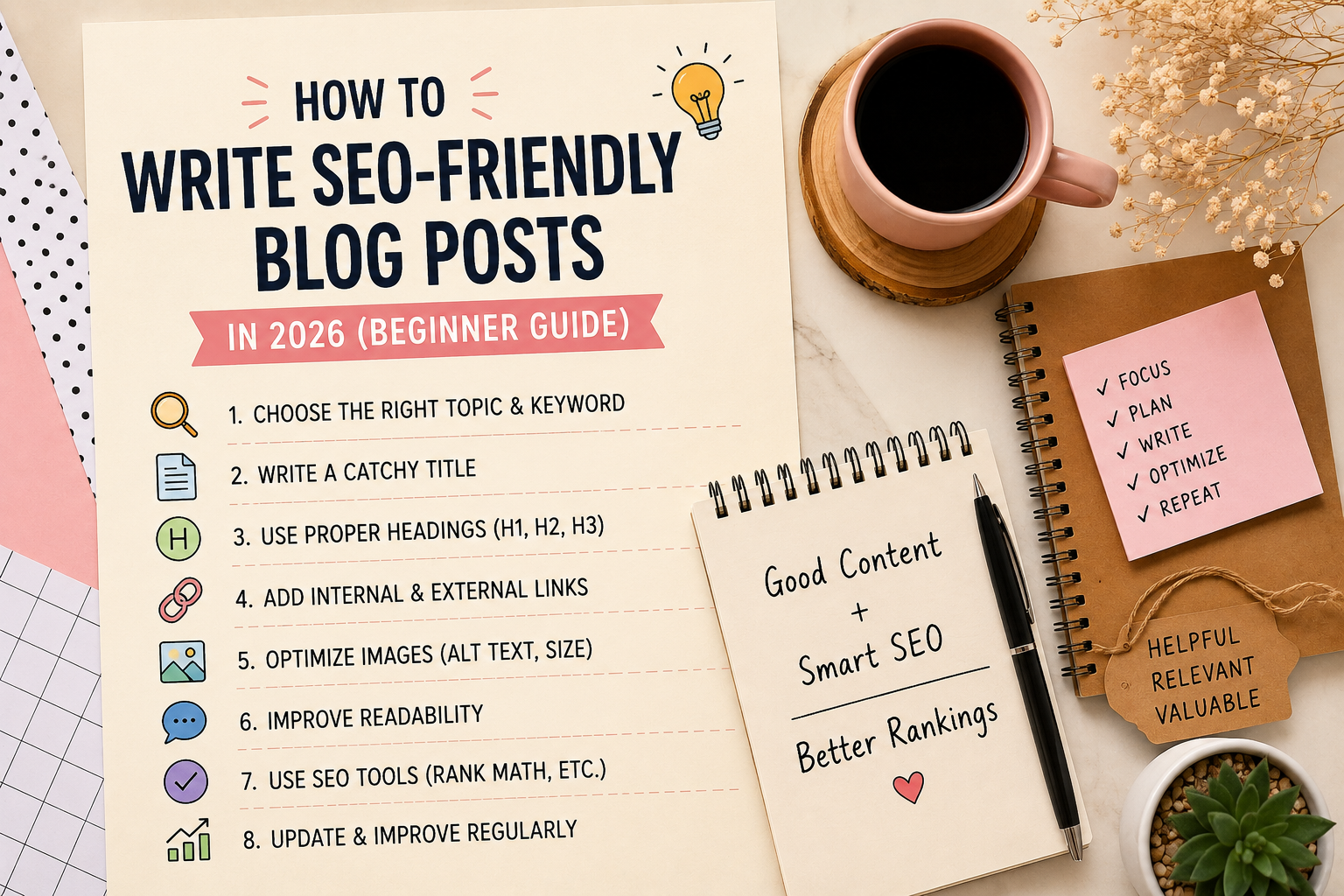
How to Write SEO-Friendly Blog Posts in 2026 (Beginner Guide)
When I published my first few blog posts, I honestly thought good writing alone would bring traffic.
I spent hours writing detailed articles, pressed publish, and waited for visitors.
Almost nothing happened.
At first, I blamed competition.
Then I realized something important — Google could not properly understand my content because I knew almost nothing about SEO-friendly writing.
My articles had:
- Poor headings
- No keyword strategy
- No internal links
- Weak titles
- Unoptimized images
Once I started learning basic SEO writing techniques, things slowly improved.
The good news is that writing SEO-friendly blog posts is not nearly as complicated as beginners usually think.
You do not need robotic keyword stuffing or advanced technical skills.
You mainly need clear helpful content that both readers and search engines can understand easily.
If you are learning how to write SEO-friendly blog posts in 2026, this beginner guide will help you avoid many of the mistakes I personally made early on.
What Makes a Blog Post SEO Friendly?
An SEO-friendly article helps search engines understand:
- What the article is about
- Who it helps
- Which keywords it targets
- How useful the content is
At the same time, the article still needs to feel natural and genuinely helpful for real readers.
Good SEO writing is not about tricking Google.
It is mostly about improving clarity, structure, and user experience.
How to Write SEO-Friendly Blog Posts Step by Step
After writing many WordPress and SEO articles, I realized most successful blog posts follow a simple structure.
- Choose the right topic
- Find a focus keyword
- Write a strong title
- Use proper headings
- Add internal links
- Optimize images
- Improve readability
- Write naturally
These simple improvements make a huge difference over time.
Choose Topics People Actually Search For
This was one of my biggest beginner mistakes.
I wrote random articles based only on personal interest.
The problem?
Almost nobody searched for those topics.
Now before writing anything, I usually check:
- Google search suggestions
- Google Trends
- Search Console data
- Competitor article ideas
Understanding what people actually search for helps articles perform much better.
Use One Clear Focus Keyword
Beginners often overcomplicate keyword research.
You do not need to target dozens of keywords in one article.
Usually one clear focus keyword is enough.
For example, this article targets:
“How to Write SEO-Friendly Blog Posts”
That keyword naturally appears in:
- Title
- Introduction
- Headings
- Meta description
- Image alt text
The important thing is keeping keyword usage natural.
I personally avoid forcing keywords awkwardly into every sentence.
Write Better Blog Titles
Titles matter much more than many beginners realize.
I once updated old article titles and noticed click-through rates improve surprisingly fast.
Good SEO titles are usually:
- Clear
- Specific
- Easy to understand
- Problem-focused
For example:
“SEO Tips” feels weak.
“How to Write SEO-Friendly Blog Posts in 2026” feels clearer and more useful.
Use Proper Headings
Headings improve both readability and SEO structure.
I personally use:
- H1 for article title
- H2 for main sections
- H3 for smaller subtopics
Proper headings make articles easier to scan, especially on mobile devices.
Search engines also understand content structure better when headings are organized properly.
Write for Humans First
One thing I learned after reading many AI-style articles is that robotic writing feels exhausting quickly.
People prefer content that sounds natural.
I personally try to write blog posts the same way I would explain something to a friend.
That usually means:
- Short paragraphs
- Simple language
- Real experiences
- Practical advice
Helpful content keeps readers engaged longer.
Improve Readability
Even good information becomes difficult to read if the article feels cluttered.
Simple readability improvements include:
- Short paragraphs
- Bullet points
- Clear headings
- Simple vocabulary
- Good spacing
I personally noticed lower bounce rates after improving article readability.
Add Internal Links Naturally
Internal linking is one of the easiest SEO improvements beginners often ignore.
Whenever related articles connect together, visitors stay longer on the website.
For example, SEO writing articles can naturally link to WordPress SEO tools or blogging guides.
You can also read our Best Free SEO Tools for Bloggers article to improve your keyword research and optimization process.
You can also explore our Website Traffic guide to learn how SEO-friendly content helps grow traffic.
Add Outbound Links to Trusted Sources
Many beginners never add external links.
Actually, linking to trusted helpful resources can improve article value.
For example, I sometimes reference tools like Google PageSpeed Insights when discussing website performance.
Outbound links should feel natural and genuinely useful.
Optimize Images Properly
Images improve blog appearance, but poorly optimized images can slow websites badly.
I personally made this mistake many times early on.
Now I usually:
- Resize images before upload
- Compress files
- Add alt text
- Use WebP when possible
Faster websites usually perform better overall.
Write Strong Meta Descriptions
Meta descriptions help summarize articles for search engines and users.
A good meta description should:
- Explain the article clearly
- Include the focus keyword
- Encourage clicks naturally
I personally keep them simple instead of overly promotional.
Use SEO Plugins Wisely
Plugins like Rank Math SEO make optimization much easier for beginners.
It helps identify:
- Missing keywords
- Internal link issues
- Image alt text problems
- Readability improvements
Honestly, it became much easier for me to structure articles properly after using SEO plugins consistently.
Avoid Keyword Stuffing
This is extremely important.
I used to repeat keywords too aggressively because I thought it would improve rankings.
Actually, it made articles sound unnatural.
Modern SEO works better when content feels genuinely helpful and easy to read.
Natural keyword usage is usually enough.
Update Older Articles
One thing that surprised me most about blogging was how much traffic old articles could regain after updates.
Sometimes I improve older posts by:
- Adding internal links
- Updating headings
- Improving readability
- Refreshing information
Updated content often performs better than abandoned articles.
Common SEO Writing Mistakes Beginners Make
Writing Only for Search Engines
Articles should help real readers first.
Using Difficult Language
Simple writing usually performs better.
Ignoring Mobile Readers
Most visitors now browse using phones.
Clean formatting matters a lot.
Publishing Thin Content
Short weak articles struggle more in competitive search results.
Simple SEO Writing Workflow I Personally Use
If I write a new blog post today, my process usually looks like this:
- Choose one clear keyword
- Write a useful title
- Create proper headings
- Write naturally
- Add internal links
- Optimize images
- Check Rank Math suggestions
This process keeps content organized without making SEO feel overwhelming.
You can also read our Image Optimization guide because faster images improve SEO and readability.
What Helped Me Improve SEO Writing Most
Honestly, the biggest improvement came from focusing less on “gaming Google” and more on helping readers properly.
Once I started writing clearer, more structured, and genuinely useful content, SEO became much easier naturally.
Search engines increasingly reward content that solves problems well.
Final Thoughts
Learning how to write SEO-friendly blog posts takes practice, but it becomes much easier once you understand the basics.
You do not need advanced SEO knowledge or robotic keyword stuffing.
Most successful blog posts simply combine:
- Helpful content
- Clear structure
- Natural keyword usage
- Good readability
- Proper optimization
If you stay consistent and keep improving gradually, SEO-friendly writing becomes much more natural over time.

Askwps is a technology and blogging website that shares helpful guides about WordPress, SEO, web hosting, blogging, website speed optimization, and online tools. Our goal is to provide simple and practical tutorials for beginners and website owners.