
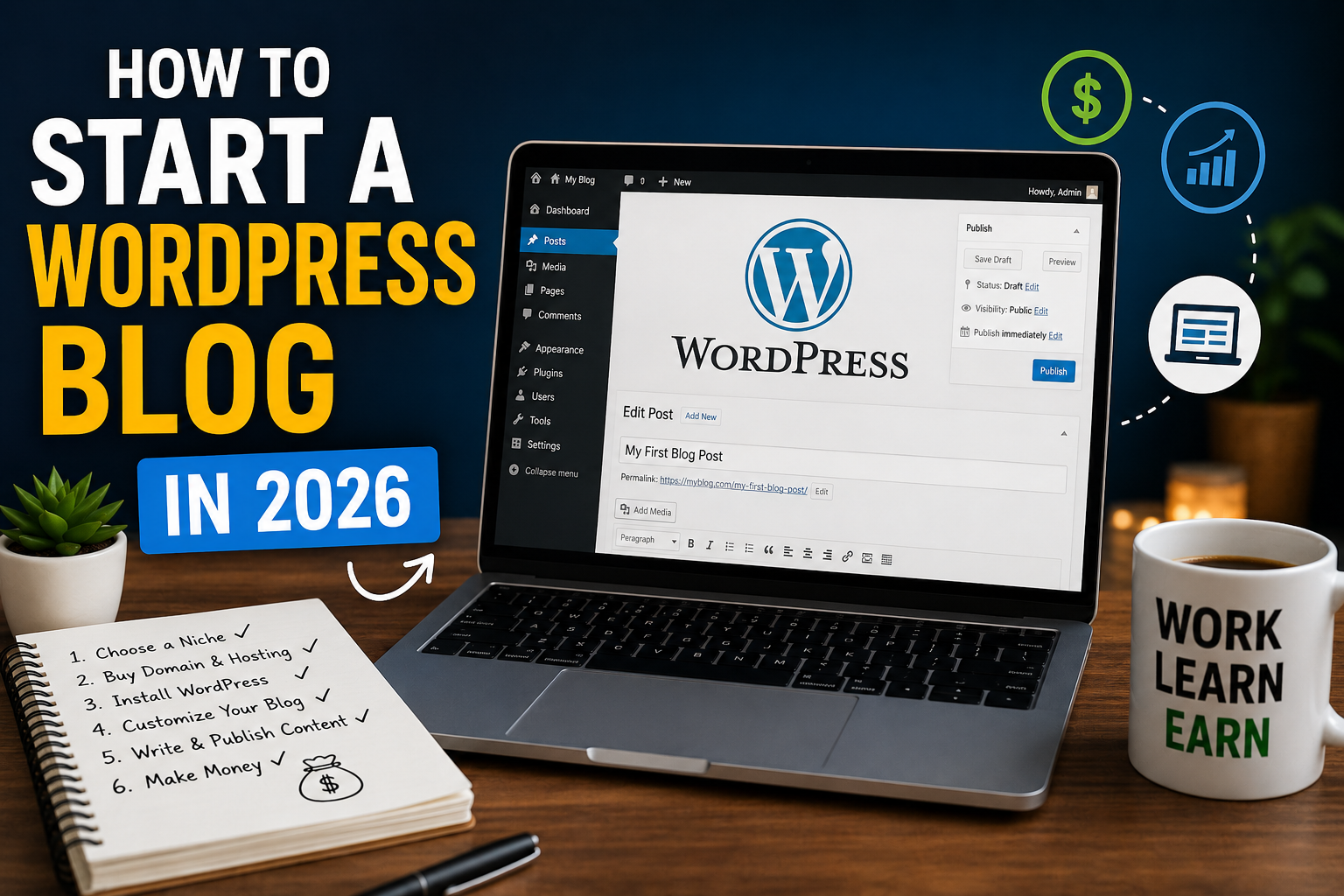
How to Start a WordPress Blog in 2026 and Make Your First Money
I still remember the day I started my first WordPress blog.
I spent hours choosing a theme, changing colors, installing random plugins, and checking my website again and again like someone was secretly visiting it every five minutes.
The funny part?
Almost nobody visited for weeks.
At that time, I honestly thought blogging was easy money. I had watched YouTube videos showing screenshots of huge earnings, and I assumed money would start coming automatically after publishing a few posts.
Reality was very different.
I made mistakes, wasted time on unnecessary things, wrote articles nobody searched for, and ignored SEO completely.
But slowly, after learning how WordPress actually works and understanding what real visitors need, things started improving.
If you are planning to learn how to start a WordPress blog in 2026, this guide will help you avoid many beginner mistakes I personally made.
You do not need to be a developer or a technical expert. You just need patience, consistency, and the right starting steps.
How to Start a WordPress Blog Step by Step
Starting a blog becomes much easier when you focus on the basics first instead of trying to make everything perfect immediately.
- Choose a blogging niche
- Buy a domain and hosting
- Install WordPress
- Choose a lightweight theme
- Install useful plugins
- Write helpful content
- Learn basic SEO
- Apply for AdSense later
Why I Still Recommend WordPress for Blogging
There are many blogging platforms available today, but WordPress still gives beginners the most flexibility.
I tried free blogging platforms years ago, but they always felt limited.
With WordPress, you control:
- Your content
- Your design
- Your monetization methods
- Your SEO settings
- Your website growth
That freedom matters a lot if you plan to grow your blog seriously.
Choose a Blog Topic You Can Actually Write About
One of the biggest mistakes beginners make is choosing a niche only because someone claims it is profitable.
I once started writing about topics I barely understood just because they had high CPC keywords.
The result was terrible content that felt forced.
Choose something you can realistically write about consistently.
Good beginner blogging niches include:
- WordPress tutorials
- Technology
- Fitness
- Personal finance
- Gaming
- Education
- Travel
- Pets and animals
You do not need to be the world’s biggest expert. You simply need enough interest to keep learning and writing.
Buy a Domain and Hosting
This is where your real website begins.
Your domain name is your website identity.
I personally prefer short and simple names because they are easier to remember.
For hosting, beginners usually need something affordable but reliable.
Some hosting providers people commonly use are:
- Hostinger
- Namecheap
- SiteGround
- Cloudways
When I started, I chose the cheapest hosting possible, and honestly the website performance was terrible.
Slow websites frustrate visitors and also affect SEO.
Good hosting matters more than beginners realize.
Install WordPress
Most hosting providers now offer one-click WordPress installation using cPanel or Softaculous.
The process is much easier than it sounds.
Basic WordPress Installation Steps
- Login to your hosting account
- Open cPanel
- Find Softaculous Apps Installer
- Select WordPress
- Choose your domain
- Create admin username and password
- Click install
Your website will usually be ready within a few minutes.
You can also read our How to Install WordPress on cPanel guide if you need detailed setup instructions.
Choose a Lightweight WordPress Theme
I made a huge mistake with my first blog by installing a heavy theme full of animations and effects.
The website looked fancy, but it loaded painfully slow.
Now I prefer lightweight themes that are simple and fast.
Some beginner-friendly themes include:
- Astra
- GeneratePress
- Kadence
- Hello Elementor
Simple websites usually perform better.
Install Important WordPress Plugins
Plugins add extra features to WordPress websites.
But beginners often install too many plugins at once.
I personally did that too, and it slowed my website badly.
Start with only essential plugins.
Plugins I Recommend for Beginners
- Rank Math SEO
- LiteSpeed Cache
- WPForms
- UpdraftPlus
- Wordfence Security
These plugins cover SEO, speed, security, forms, and backups.
You can also read our Best WordPress Plugins for Beginners guide to understand which tools are actually useful for beginners.
Create Important Website Pages
Before applying for AdSense or publishing too many articles, create the basic pages every real website needs.
- About Us
- Contact Us
- Privacy Policy
- Disclaimer
- Terms and Conditions
These pages help websites look more trustworthy.
Write Helpful Blog Posts
This is where many beginners overcomplicate things.
You do not need perfect English or advanced writing skills.
You simply need to solve problems clearly.
When I started writing naturally instead of trying to sound overly professional, readers stayed longer on my website.
Focus on:
- Real solutions
- Simple explanations
- Practical examples
- Step-by-step guidance
If you are learning how to start a WordPress blog successfully, focus on useful content and consistency instead of perfection.
Learn Basic SEO
SEO sounded extremely confusing to me when I first heard about it.
But basic SEO is actually simple.
You mainly need to focus on:
- Good article titles
- Helpful content
- Internal linking
- Fast website speed
- Image alt text
- Meta descriptions
Plugins like Rank Math help beginners understand SEO step by step.
You can also test your website performance using Google PageSpeed Insights to improve loading speed and user experience.
Keyword research tools like Google Trends can also help beginners discover topics people are actively searching for.
Publish Consistently
This is probably the hardest part for most beginners.
Many people publish 2 or 3 articles and quit because traffic does not appear immediately.
I personally saw almost no results during my first few months.
But blogging rewards consistency over time.
Try publishing at least:
- 2 to 3 quality articles weekly
- Helpful tutorials
- Problem-solving content
- Search-focused articles
Small progress adds up faster than people expect.
Apply for AdSense
Once your website has:
- Original content
- Proper pages
- Clean design
- Good navigation
- Several helpful articles
You can apply for Google AdSense.
Do not rush this step too early.
I personally waited until my website looked complete before applying.
That approach worked much better.
How Beginners Usually Make Their First Money
Your first blogging income may feel small at the beginning.
Mine definitely was.
But seeing even a few dollars from your own website feels exciting because it proves the system works.
Common beginner monetization methods include:
- Google AdSense
- Affiliate marketing
- Sponsored posts
- Digital products
- Freelance services
Affiliate marketing and AdSense are usually the easiest starting points for beginners.
Common Beginner Blogging Mistakes
Focusing Only on Money
Visitors can easily tell when articles are written only for money.
Helpful content performs better long term.
Copying Other Websites
Copied content damages trust and creates SEO problems.
Always write original articles.
Ignoring Website Speed
Slow websites frustrate users quickly.
Use caching and image optimization early.
Installing Too Many Plugins
Too many plugins can slow websites and create conflicts.
Keep things simple.
My Honest Advice for New Bloggers
If I had to start over again in 2026, I would focus less on shortcuts and more on consistency.
Blogging takes time.
Traffic takes time.
AdSense approval takes time.
But if you continue publishing useful content and improving your website gradually, progress eventually starts appearing.
One helpful article can sometimes bring traffic for years.
That is the part many beginners underestimate.
Final Thoughts
Starting a WordPress blog feels overwhelming at first because there is so much information online.
But honestly, most successful blogs are built using simple steps done consistently over time.
You do not need perfect skills to begin.
You simply need to start, keep learning, and avoid quitting too early.
If you are serious about learning how to start a WordPress blog and make your first money online, focus on helping real people first. The growth usually follows naturally after that.

Askwps is a technology and blogging website that shares helpful guides about WordPress, SEO, web hosting, blogging, website speed optimization, and online tools. Our goal is to provide simple and practical tutorials for beginners and website owners.